
Silent Pressure: Why Jordan’s Youth Don’t Ask for Help
Introduction
Young people in Jordan face heavy school demands along with emotional strain, though turning to experts for mental health is not normal in Jordan. It is not that mental struggles happen infrequently; rather, feelings of sadness or stress are seen as signs of weakness rather than a need. In classrooms and college halls, where doing well means pleasing parents and securing jobs later, acknowledging inner struggles may lead to social discomfort or a loss of respect. Fewer young adults reach out when struggling inside. What they hold back remains within them but does not stop shaping outcomes elsewhere. Beyond personal peace, silence builds up, affecting academic success, job preparedness, and even the urge to engage in community matters. Looking at how shame and school stress reinforce each other, these forces keep young people in Jordan from seeking mental support. This silence then shapes their work futures, chances for social mobility, and involvement in public life later on.
High Distress and Low Utilization Among Jordanian Youth
Many young people in Jordan feel deep emotional strain, yet few turn to official support systems. Data from WHO and UNICEF research indicate that around 12–15% of Jordanian adolescents experience mental health disorders, with studies showing anxiety affecting between 16% and 47% of youth, reflecting a significant and widespread emotional burden. Even though these issues are becoming progressively harder to ignore, the country’s mental health services are rarely used by those most affected. Many people struggling with emotional pain skip expert help, turning to friends, family, or quiet endurance. Unemployment hits young adults hard, with ~39% unemployed. When sadness runs high yet few reach out for care, it reveals deeper problems in how systems treat those in need. Barriers exist not because demand is lacking, but because access gets blocked along the way.
Evidence of Social Stigma and Educational Pressure as Barriers
What we see in real-world data, whether locally or globally, shows something clear about Jordanian youth: asking for help with mental struggles often feels risky. Family ties and school expectations can add weight to that fear. Studies from UNICEF Jordan point to shame, being labeled differently by others, and worry over public disapproval, especially at home and in classrooms. Outside these spaces, the pattern holds; evidence from the Arab Barometer shows people may see emotional strain as a failure instead of needing care. That shift in perception blocks many from speaking up or reaching out.
When it comes to school life, things get especially tense. Research from UNICEF shows young people in Jordan face heavy pressure tied to how families view their schoolwork and job prospects ahead, making anxiety worse, even though hiding it feels necessary due to financial concerns. Many students worry that help-seeking could backfire, like being seen as weak or falling behind peers racing toward top spots. What makes it harder is that school and college mental support systems often lack strength or openness. Counseling there tends to be limited, sometimes ignored, because talking about emotions just feels risky.
What we see is that seeking assistance is not limited only by how much help exists, yet things like school culture and fear around asking can quietly block people, especially teens under pressure, from speaking up in the first place.
Interpreting Youth Perceptions of Mental Distress and Help-Seeking
Jordanian youth’s approach to seeking help for mental struggles is shaped not by a lack of information or services, but by hidden social rules around pain. It is seen not as illness but proof of a frail character, weak control, or failing grades. For kids in homes where school success means money later, talking about sadness might look like risking future chances instead of asking for support.
What people see every day makes it feel real. Schools often measure success by test scores and high rankings, so being weak feels dangerous. Because of that pressure, teens may think asking for additional support shows weakness instead of strength. It could seem like giving up rather than getting help. That belief sticks when outcomes seem fixed and visible.
What happens next is that stigma gets absorbed, so young people stop asking for support not because it is forbidden, but because they quietly adjust their actions to fit expectations that they must tough it out and never seem weak.
So anxiety turns personal, kept close like a secret instead of shared openly. Facts show worry exists, yet spaces like classrooms reward output while ignoring inner strain. Being strong now means hiding when tired, because asking fits poorly with how achievement gets measured.
From Suppressed Help-Seeking to Long-Term Socioeconomic and Civic Outcomes
When people face barriers when seeking mental health support, their emotional strain does not vanish; it builds up. Over years, such pressure influences school performance, job paths, and involvement in society. When left unaddressed, conditions like anxiety, sadness, or ongoing stress weaken focus, drive, and thinking clarity. As a result, learners may fall behind, finish their education late or never, or withdraw from study entirely. In places like Jordan, where high grades determine career opportunities, these outcomes can limit entry into steady, fulfilling jobs. Starting out, many find it hard to look seriously for work when stress weighs heavily. Unresolved emotional struggles make tackling job searches feel even harder. When disappointment hits, staying grounded becomes tougher too.
What happens here pushes many into unstable work, especially young adults without family or community support. Over time, this leads to long stretches of job scarcity. It is not just financial; it also affects how people see their place in society. When emotional weight builds year after year, some pull back from group activities. They might doubt government promises or believe that few changes come from collective effort. Their sense is powerlessness to shift outcomes.
What stays unseen is how personal struggles quietly block access to support, tying private pain to wider gaps in movement and engagement across society. Mental health issues then take shape not just as personal burdens but as invisible limits woven into institutions, shaping outcomes far beyond one person’s experience.
Why Suppressed Help-Seeking Matters for Jordan
Hidden struggles with mental health among young people in Jordan ripple outward, shaping broader consequences for years to come. Not only personal well-being hangs in the balance; the nation’s trajectory also feels the weight. A large share of Jordan’s people are under 30 years old, building the backbone of its workforce and public life. When emotional pain goes ignored, pressure builds on top of deep-rooted problems like joblessness among youth, limited upward mobility in careers, and talents lost without purpose. When school results dip and work connections fade, the ability to build skills and contribute economically takes a hit.
Still, lasting exclusion and unaddressed emotional pain wear down confidence in others and weaken personal control, often leading to disinterest in politics along with little involvement in public life. Since youth involvement shapes much of society’s direction, especially when progress depends on their access and advancement, repeated cycles may deepen gaps between generations. Seeing youth mental well-being as just a health issue misses how deeply it runs into economy, group harmony, engagement, and long-term outlook. Failing to face up to hidden pressures in society and schools that silence requests for support might lock harm into a loop — where emotional pain quietly holds back personal growth along with shared advancement.
What stands out here is how young people in Jordan avoid asking for help when they are struggling mentally. It makes sense given the pressures around them. School success often links to family honor and money, so admitting emotional difficulties might seem risky rather than helpful. Because of this, problems with mental wellness rarely appear in official discussions about education or work life, even though evidence proves that it affects youth outcomes strongly.
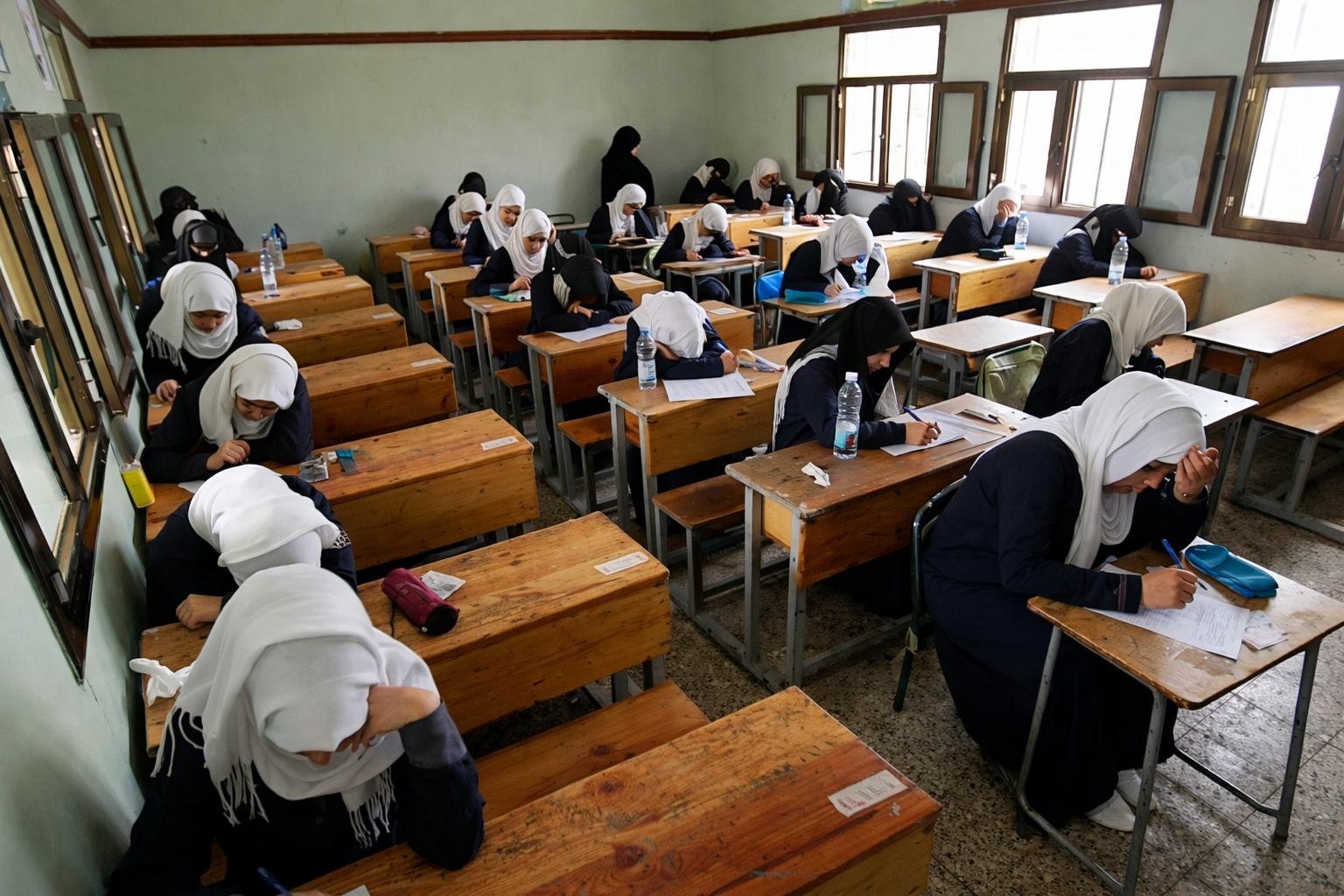
Photo credit: image sourced from Getty (Yemeni students sit for the final-year school exams at a secondary school in the capital Sanaa, on July 30, 2016. (Photo by MOHAMMED HUWAIS / AFP via Getty Images)