
What Comparing Palestinian and Native American Land Claims Reveals
Introduction
How is it that humans often live in conflict? Why can a piece of land determine the outcome of communities? Or whether external powers have the authority to assert control over it? Everyone has hearts, minds, and blood running through their veins. Most want to live and thrive in their communities. Yet what happens when the place of your birth heavily influences access to safety, resources, and rights?
“Displacement” and “annexation” are terms familiar with Palestinians and Native Americans as both have experienced the power of external governing authorities. Over 60,000 Native Americans from 18 different tribes were forcefully relocated to Mississippi, while approximately 700,000 Palestinians were displaced to neighboring Arab countries as they faced acts that disrupted their communities and livelihoods.
The stories expressed by Palestinians and Native Americans share a common theme as they explore the impact of external powers on their land and communities, despite differing in culture, history, and circumstance. Both cases illuminate how controlling authorities can seek to dominate land for strategic economic or political purposes.
How Palestinians and Native Americans Lost Their Land and the Similar Policies Used Against Them
Influenced and heavily monitored by Imperial powers, Palestinians and Native American territories faced limited freedom and lacked the ability to safely remain on their land. Native American land was sought for its resources and economic potential, while Palestinian land became contested due to historical cultural and religious significance.
Taking a glance into Native American history, the Taíno people, the dominant indigenous group in the Greater Antilles, faced slavery, forced labor, and violence under Spanish colonists after 1492, when Christopher Columbus’s voyages initiated European colonization in the Caribbean. Seeking gold, the Spanish also allied with tribes such as the Tlaxcalans, with the aim to conquer the Aztec Empire, which struggled from warfare, disease, and harsh colonial policies.
After hearing of “great wealth” in the Americas, additional European powers arrived with a goal to exploit and influence the region. France heavily engaged in trade and intermarriage with some indigenous communities, while Great Britain emphasized permanent settlement, contributing to the displacement of tribes such as the Powhatan Confederacy (1610-1646) and the Pequot War (1636-1638). This heavily affected the Americas, as before colonization, Native American societies had preserved complex social, agricultural, and trade networks.
A similar issue occurred in Palestine during World War I, as the “Jewish-homeland” movement expanded. Britain claimed control of Palestine after the collapse of the Ottoman Empire, managing the Mandate and making decisions about the territory's future with limited input from the Palestinian population.
In 1948, Jewish immigration expanded under British administration, and tensions increased between communities. The end of the British mandate led to the establishment of Israel and the occupation of Palestinian land, which led to war, causing roughly 700,000 Palestinians to leave or be displaced from their homes. This event is known as Al-Nakba, translating to “The catastrophe.” Subsequent wars, military occupation, settlement expansion, and unarmed conflicts caused civilian deaths, property destruction, and continued displacement.
In the most recent Palestinian-Israeli conflict, tens of thousands of children were affected in the 2023-2026 Gaza conflict, with thousands injured or orphaned. Hind Rajab, a six-year-old girl who was trapped in a car during the conflict, was shot over 300 times. Such incidents reflect a wider pattern of policies and territorial control. Policies used against Native Americans and Palestinians included forced relocation, displacement, land confiscation, and restrictions on livelihoods. These actions illustrate how communities have been affected by measures taken to assert territorial control.
Israeli Settlements and U.S. Westward Expansion and Their Shared Patterns of Land Control and Displacement
Both Palestinians and Native Americans experience significant consequences from policies driven by expansion and control of land.
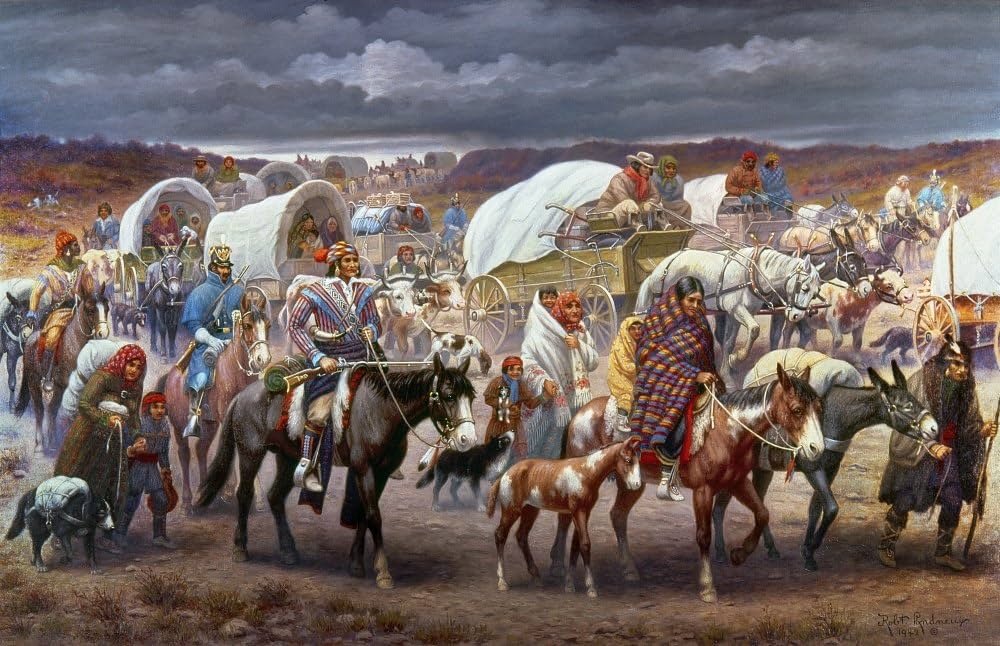
Through military action, damaged treaties, and forced migration, U.S. Westward expansion was able to take place. The Indian Removal Act of 1830 caused the relocation of many tribes from the southeast to lands west of the Mississippi River. Labeled as the “Trail of Tears,” this journey resulted in thousands of deaths due to disease, starvation, and harsh travel conditions. The Act and relocation involved coercion threats and military enforcement, which disregarded the treaties and Native American sovereignty.
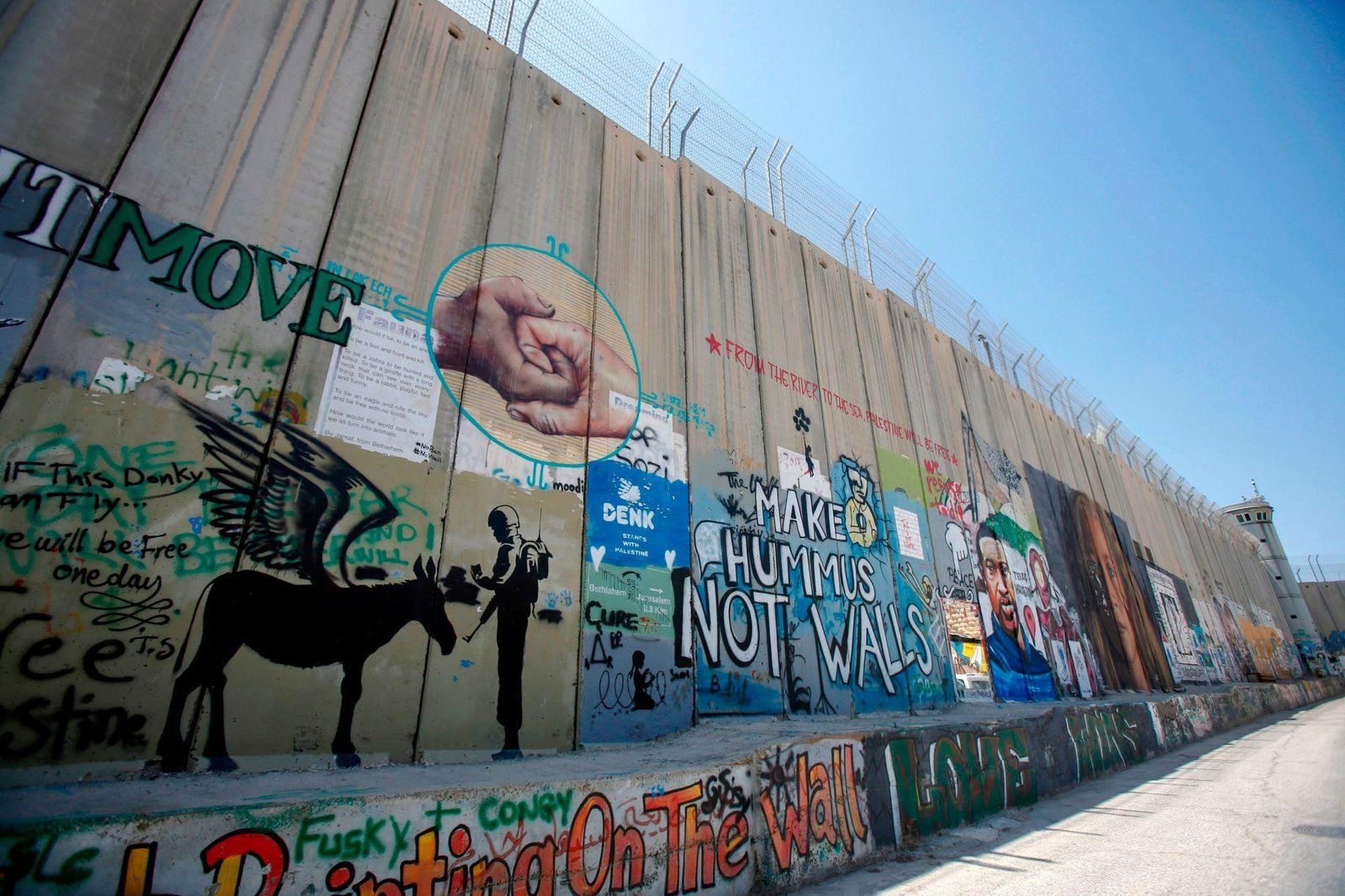
In Palestinian history, tens of thousands of housing units were illegally approved by Israeli authorities after recent settlement expansion in the West Bank, leading to the displacement of almost 30,000 Palestinian families. Settlements in the West Bank are considered illegal under most interpretations of international law, and while Israel disputes this, a separation barrier stretching over 700 kilometers has limited Palestinian movement, confining them behind barriers. The United Nations and multiple humanitarian organizations have reported incidents of violence, property damage, and displacement, affecting Palestinian communities.
In both cases, government policies have had significant impacts on populations, affecting lives, property, and community structures.
How Displacement Reshaped Surrounding Societies in Palestine and North America
As of 2024, an estimated 50–60% of Jordan’s population is of Palestinian origin, many of whom arrived or descend from refugees who fled during the 1948 Arab–Israeli war. Additionally, during the 1967 conflict, annexation of the West Bank contributed to this influx, with over 2.4 million Palestinian refugees now residing in Jordan. Political tensions emerged due to the establishment of the Palestinian Liberation Organization in the 1960s (PLO), resulting in clashes between the PLO militias and the Jordanian Army. This caused the Palestinian Liberation Organization to relocate to Syria and Egypt in 1971. Eventually, Palestinian and Jordanian communities became culturally and socially interlinked, effectively functioning as a single community.
Similarly, internal migration was caused by the U.S. Indian Removal Act, influencing movement into British North America, now known as present-day Canada. Tribes such as the Cherokee and Mohawk settled in areas of Upper Canada during the 1830s, affecting land use and demographic balances.
However, the displaced indigenous peoples in Canada were heavily impacted by colonial policies, including the Gradual Civilization Act of 1857 and Indian Lands Act of 1860, leading to legal frameworks such as the federal Indian Act of 1876. These policies were brutal, as they restricted cultural practices and imposed systems such as residential schools. Today, Indigenous peoples constitute about 5% of Canada’s population, and there are ongoing efforts to focus on reconciliation, cultural restoration, and legal recognition of rights.
Land, Displacement, and the Ongoing Struggle for Home
Webster’s Dictionary defines home as “one’s place of residence”. For many Native Americans, home encompasses the land where their tribes originated and traditions developed. For Palestinians, home includes family properties, cultural sites, and neighborhoods from which many were displaced. Possible solutions for both issues have been debated for years.
While a two-state solution and the enforcement of land rights is often sought for Palestinians, strengthening tribal sovereignty and land restoration is advocated for Native Americans. However, these are only a few of many possible solutions, and resolving these issues remains complex, as the outcomes rest in the hands of the U.S. for both cases. Comparing Palestinian and Native American experiences highlights a historical pattern in which land has often been subject to control, exploitation, and displacement by powerful actors.
It is significant to respect the communities, cultures, and historical ties to each land while preserving recognition of rights and acknowledgment of past and ongoing displacement. We must ensure that communities can maintain connections to their ancestral lands to further understand their history and identity.
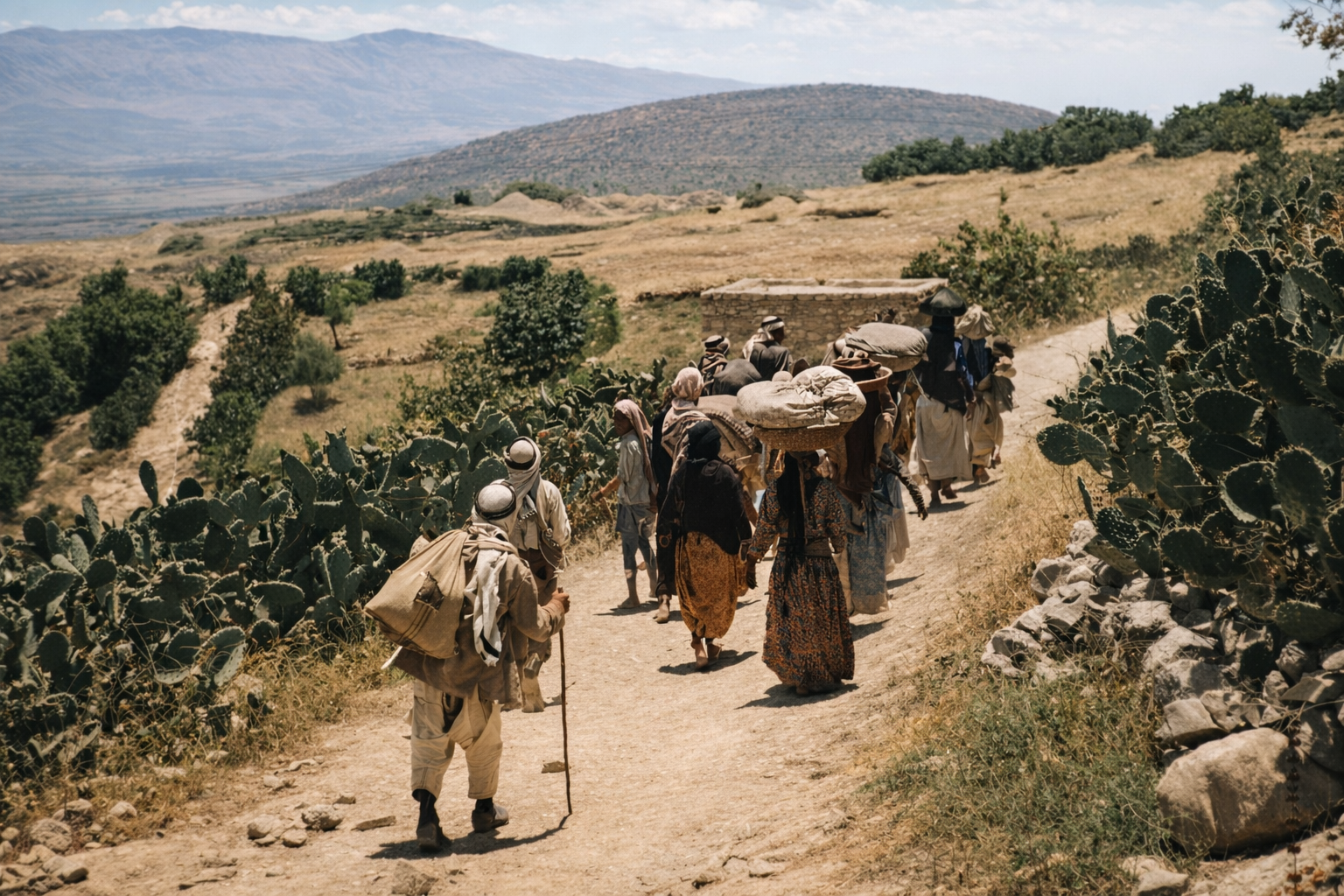
Disclaimer: The article thumbnail is based on a real historical photograph. Artificial intelligence was used only to colorize and increase the resolution for improved visual quality. Click here to view the original image.