
The Rise of Jordanian Businesswomen Combating Poverty Through Creativity
Introduction
Entrepreneurship is rising in Jordan, not just as a form of business, but as an outlet where passion, culture, and creativity connect to form something meaningful. Challenging traditional societal norms, women began to enter the field as they brainstormed solutions that aim to tackle social, economic, and agricultural challenges within their communities.
This national momentum is increasingly visible among Jordan’s youth. Lenabtaker, an annual entrepreneurship and innovation competition, was hosted at Amman Baccalaureate School, where students analyze and invent strategic business ideas that impact our community. In 2025, Grade 9 students Jana Khalifa, Aisha Al-Naser, and Maya Dallal placed second for their innovative medical product aiming to address crucial challenges faced by blind individuals in Jordan. Armed with laptops and an astonishing amount of research, they then entered Lenabtaker’s regional competition, competing against hundreds of participants from Middle Eastern countries. Their achievement reflects a wider transformation taking place across Jordan’s entrepreneurial landscape.
Jordan is becoming a country of innovation. Through the lens of women struggling with poverty, displacement, and domestic instability, entrepreneurship is seen as a platform for empowerment. Approximately 33.1% of Jordan’s female population struggles to find jobs, or any opportunities for employment, especially for refugees, low-income families, and many communities across various social backgrounds.
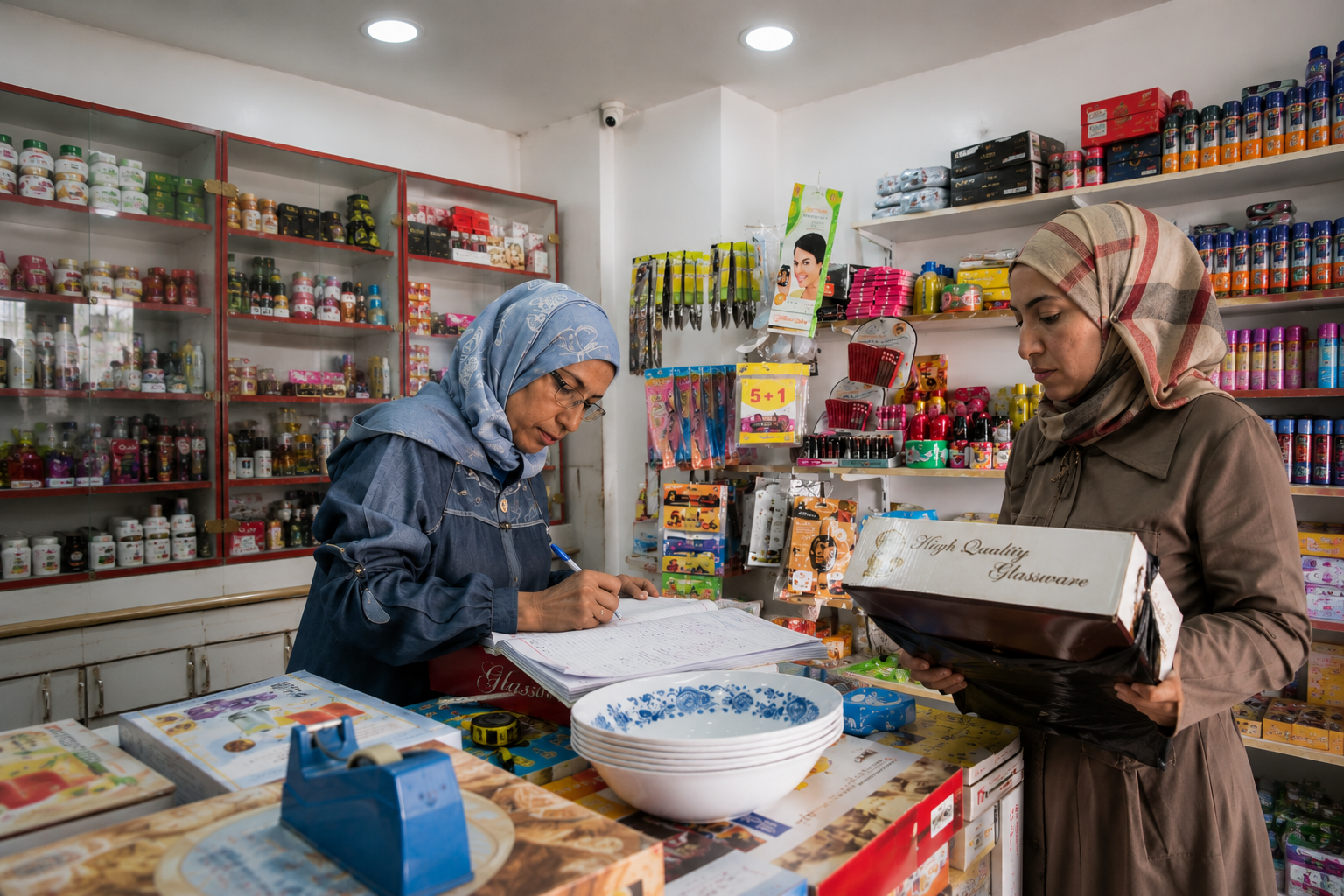
In response to the financial instability, home-based businesses have increased significantly, involving crafts, food, design, toiletries, and agriculture. Emerging initiatives such as the UN Women’s “Oasis” program have enabled Syrian and Jordanian refugees to obtain business training, presenting a rise in women-owned businesses with the support of NGOs and Jordan’s microfinance sector.
Women’s financial independence in Jordan is accelerating, with support organizations such as UN Women, UNHCR, Microfund for Women, and the Jordan River Foundation, among many others. Possibilities are expanding, determination increasing, and dreams are coming to life, emerging in a world where the “impossible” becomes possible.
How are Jordanian women using entrepreneurship to build businesses and reduce poverty?
Growing initiatives in Jordan, dedicated to providing business opportunities for women of different social classes, have successfully helped women create their own businesses: restaurants, fashion labels, medical services, and many other products. The responsibility of providing income and constant care to their families fuels the minds, souls, and memories of each business owner to succeed for their loved ones and themselves.
Teaching herself how to manufacture dolls by watching YouTube videos, Dania Al-Ahmad, a 35-year-old woman, launched her own business, relentlessly fabricating dolls, puppets, and furniture for children’s rooms, after years of rejection. With a lack of support and financial stability, she envisioned following her passion and becoming an artist. After years of dedication, she became Jordan’s finest crochet artist, and had the opportunity to present her success to the Queen of Jordan, HRH Rania Al Abdullah, and the King of Jordan, HRH Abdullah II, at a youth innovation forum.
Thousands of youth projects have surfaced across Amman due to motivational programs such as Digital Opportunity Trust (DOT) in Jordan, in collaboration with Global Affairs Canada, sparking shifts in the innovation industry. The project focused on educating youth about workforce readiness, entrepreneurship, social innovation, and skills such as digital literacy. They served more than 40,000 community members, 70% of whom are women. The first-place winner, Shaima al-Hanaketeh, created her own business called “Code Like a Girl,” aiming to teach young girls digital literacy, coding, and the basic principles of entrepreneurship.
A project titled “You Have a Chance” implemented by The Arab Renaissance for Democracy and Development (ARDD) is a two-year initiative aimed at enhancing the lives of women and young girls in Jordan, especially in the governorates of Balqa and Aqaba. This project was dedicated to combating imbalances in economic instability and gender inequality through economic empowerment and development.
Furthermore, the Netherlands acted as a major contributor to Jordan’s rising entrepreneurship development. Queen Maxima of the Netherlands paid a visit to the Microfund for Women branch in Salt, as she met with refugees, listening to their stories of achievement and support through the program in launching their own businesses. Highlighting Queen Maxima’s words, “It is extremely important that more women are independent and the examples of successful women entrepreneurs in Jordan are wonderful and an important example for other women.”
While growing rapidly, the Microfinance sector remains a subject of debate on its impact on poverty reduction and women’s empowerment, challenging its efforts to enhance economic stability and financial freedom. Most of this growth is made up of microcredit offered by specialized microfinance institutions (MFIs) on a cost-recovery basis. The impact of MFIs’ services on poor and low-income Jordanians is discussed constantly, despite the demonstrated portfolio growth, high repayment rates, and financial self-sufficiency.
How does Microfund for Women support female entrepreneurs and help them overcome business barriers?
Dedicated to supporting women in becoming empowered entrepreneurs, Microfund for Women is Jordan’s first and largest private non-profit shareholding company. Having received countless awards in recognition of its work towards empowerment and financial inclusion of women, Microfund for Women is highly acclaimed locally, regionally, and internationally.
Microfund for Women has provided support to hundreds of women and men through loans and NGO support. A woman whose life shifted due to Microfund for Women’s support was offered a loan which allowed her to continue her work in trade by reselling items and adding a reasonable profit margin. Siwar Hussein, a mother and a household provider, lives in the Hussein refugee camp where income is low and prices are unreasonable. Siwar stated that, for the first time in her life, she was able to buy her kids gifts such as toys, and refurnish her home for the first time in decades.
Moreover, Aisha, a 49-year-old woman, is a skilled and meticulous tailor who spontaneously decided to create her own passion project to get income and support her family of five. Aisha, who lives in the Eastern Badia in Mafraq, north of Jordan, took five loans from Microfund for Women from 2002 until 2020. She paid off an average of 1 loan every 2 years, enabling her to purchase needed equipment and raw materials to expand her project. Aisha presented her business at local bazaars, crowded exhibitions, and innovation forums where she received recognition for her achievement, and new customers.
Microfund for Women serves marginalized, underserved, and neglected societies that demonstrate passion, skill, motivation, and entrepreneurial spirit, with special emphasis placed on supporting women who lack access to traditional financial institutions and their services. Women are gaining greater financial stability, an improved quality of life, and a meaningful chance to thrive in the business sector, all while strengthening their confidence and sense of purpose. Through organizations such as Microfund for Women, many families have a stronger opportunity to confront poverty and work toward a more secure and hopeful future.
How do women-led small businesses contribute to Jordan’s economy, and what challenges do they face as they grow?
Many women are causing their communities to shine and grow through small businesses by utilizing their creativity and ideas, and becoming a contributing factor in Jordan’s local economy. Despite tiresome challenges such as limited funding and social expectations, women entrepreneurs have continued to move forward. The gender gap in start-ups has decreased to 3% in 2024 from 9.2% in 2023, presenting a significant decline in gender inequality.
Through targeted financial products and partnerships, such as Microfund for Women collaborating with international organizations such as the European Investment Bank and the European Bank for Reconstruction and Development, Jordan’s microfinance sector is expanding profoundly, as 96% of specialized portfolios are dedicated to female borrowers.
Moreover, Microfinance institutions are prioritizing rural areas to reach underprivileged women, operating 45 out of 64 branches near marginalized communities, expanding their footprint outside of Amman. Studies indicate that 91% of women running informal enterprises in Jordan seek microcredit for expansion and support.
Women’s entrepreneurship is central to the national goal of creating over 1 million jobs and doubling women’s economic participation by 2033. While women-led businesses face challenges like limited access to finance, social and cultural barriers, and a lack of access to childcare, their motivation to resolve these barriers is powered by a deep desire to create, innovate, and build something of their own, something that can benefit both themselves and their communities, not just to gain economically.
From Vision to Empowerment
When we look up at the sky, we see clouds, shifting shades of blue, and the sun. Yet others might see illustrations, faces, patterns, or even a piece of furniture. Creativity is a vast field, where vision can cultivate art, literature, recipes, or homes.
I know that when I read a book, I lose myself in the complex realities the characters face, imagining the copper hair of the protagonist, or the crashing waves as the characters walk along the beach. I may not be artistic, but I understand the limitless places your creativity can take you.
Underserved women who have a vision for a product, an idea for a business, or a wish to impact their community often lack the guidance, support, and finances to turn their creativity into solutions.
Even with the help of microfinance institutions that offer loans, training programs, and mentorship, it is up to us to shine a light on these female-led small businesses, challenge gender norms, and support their growth.
And if you have an idea tucked away in the back of your mind, give it life. Set a timeline, a goal, a vision. Let it shine in the world and become one of Jordan’s contributing female entrepreneurs.