
Dependency or Development? The effect of allies on the Jordanian economy
Introduction
Can alliances truly help a country develop, or is it a risk leading to over-dependence? To Jordan, alliances are more than just political ties; they help improve the country’s economy in many ways. The Gulf Cooperation Council (GCC), the European Union (EU), and the United States of America (USA) provided aid, investments, and trade, which helped significantly improve Jordan’s economy. However, can reliance on international relations lead to the downfall of Jordan’s economy?
Jordan
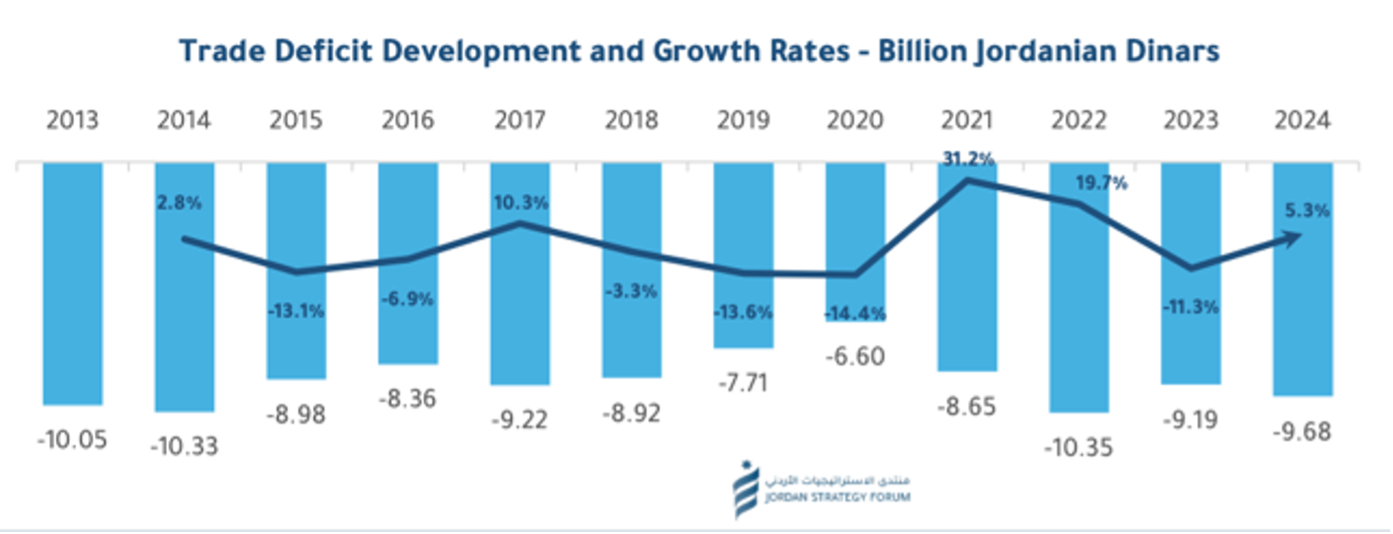
Figure 1. Trade deficit and Growth Rates Graph
The Jordanian economy heavily relies on external support to improve its economy as it lacks natural resources. As of 2024, Jordan’s GDP was at $53.35 billion (USD). Jordan’s total trade was equivalent to 81% of its GDP. However, its trade deficit is equal to around 27% of the country’s GDP. Despite having 22 trade agreements with 57 countries around the world, Jordan still has trade deficits with 96 countries around the world. Conversely, Jordan has improved in foreign trade indicators in 2024, including a 4.1% increase in national exports compared to 2023. Despite the deficit dropping during the pandemic, it spiked dramatically by over 31% in 2021 as the economy reopened and stayed at high levels thereafter, reaching around JD9.7 billion in 2024. Even though Jordanian exports are growing, the gap remains wide because the country is still spending much more on imports than it earns from exports. Apart from Jordan’s trade and GDP, the country struggles with high unemployment rates, with unemployment staying around 20% since 2020, causing families to emigrate. In addition to this issue, Jordan’s population is rapidly growing due to hosting a large number of refugees, which has increased pressure on public services, infrastructure, and the labor market.
The United States of America (US)
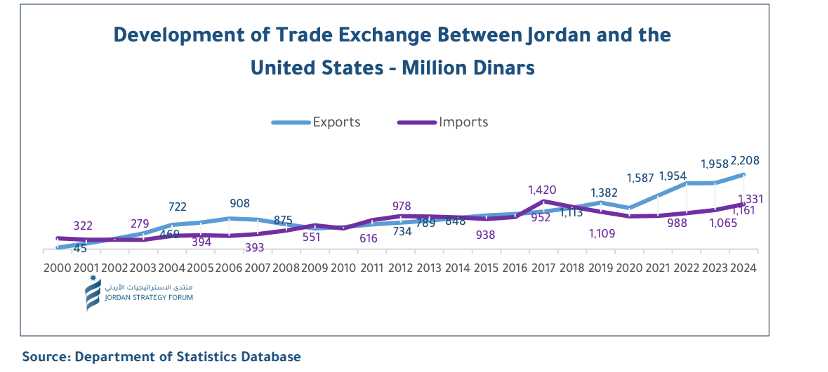
Figure 2. Trade between Jordan and the US Graph
Jordan has been a long-term ally to the US, as the countries have been close security partners and have cooperated on multiple international and regional issues. Additionally, Jordan has been a longtime US partner in global counterterrorism operations. According to the US Department of State, “The U.S. deeply values its long history of cooperation and friendship with Jordan, with which it established diplomatic relations in 1949. The U.S. appreciates the leadership role that Jordan plays in advancing peace and moderation in the region.” and “The peace process and Jordan’s opposition to terrorism parallel and assist wider U.S. interests. U.S. policy seeks to reinforce Jordan’s commitment to peace, stability, and moderation.”
In addition to providing aid, the US is also a strategic trading partner for Jordan as it accounts for roughly 26% of Jordan’s national exports, and in 2024, these exports were equal to around JD2.21 billion (US$2.96 billion), while the imports were around JD1.33 billion (US$1.83 billion). In 2001, a Free Trade Agreement (FTA) was signed. With this FTA, trade between Jordan and the United States has grown significantly. By 2024, Jordan’s exports to the U.S. reached a high of JOD 2.208 billion (US$3.11 billion) in exports, while imports from the United States stood at JOD 1.331 billion (US$1.88 billion). This resulted in a trade surplus for Jordan of 877 million JOD (US$1.23 billion).
The European Union
The EU is Jordan’s third-largest trading partner, making up 12.4% of Jordan's trade in goods with the world in 2024. However, Jordan is the EU’s 95th largest trading partner, representing 0.1% of total EU trade in goods with the world in 2024. 15.2% of Jordan’s imports came from the EU, while 6.8% of Jordan’s exports went to the EU.
The EU provided JD 640 million (€765 million) in bilateral assistance to Jordan from 2014 to 2020, under the European Neighborhood Instrument (ENI), with the aim of improving social and economic development, strengthening the law, and upgrading border management and preventing violent extremism.
As of 2025, the EU and Jordan have signed a MOU, providing Jordan with JOD 418.75 million (€500 million) Macro-Financial Assistance (MFA) which will be dispersed over the period of two and a half years. Commission President said: "Jordan is a strategic partner of the EU and we are investing €500 million in its future. This commitment aligns with Jordan's reform agenda, driving progress in areas like sustainable finance, green energy, and anti-corruption. By tackling immediate economic needs and fostering long-term prosperity, we are supporting Jordan in building a stable, resilient, and inclusive society. Today's agreement reflects our confidence in Jordan's ability to navigate regional turbulence, advance reforms that benefit all its citizens, and ensure its stability."
The Gulf Cooperation Council
Jordan also has a strong relationship with Gulf countries, specifically Kuwait, Qatar, Saudi Arabia (KSA), and the United Arab Emirates (UAE). These countries provided significant aid, investment, and trade to Jordan, helping it through economic difficulties. As of 2025, trade increased significantly to JD2.561 billion, up from JD2.157 billion. Exports increased by 95 million as they rose to JD735 million, with the main exports being fruits, vegetables, pharmaceuticals, and chemicals. Imports also climbed to JD1.826 billion, up from JD1.517 billion, primarily consisting of petroleum, food products, and chemicals. Saudi Arabia remains Jordan's primary trade partner within the GCC, with a total trade volume of JD 1.691 billion. This includes JD 478 million in exports and JD 1.213 billion in imports. The UAE follows with JD 603 million in total trade, of which JD 113 million represents Jordanian exports. Additionally, trade with Qatar reached JD 104 million, with 48 million in exports, while Kuwait accounted for JD 75 million in total trade, including 52 million in exports, making it one of the few countries Jordan has a trade surplus with.
UAE has invested in renewable energy projects in Jordan, helping reduce its dependency on imported energy and ensuring a more secure energy future. Kuwait, with its investments exceeding $20 billion in recent years, has become a significant investment partner due to its accumulated expertise. Saudi Arabia has also financed numerous developmental projects, playing a vital role in easing the economic burden on the Jordanian government. However, aid provided by Gulf countries began taking a different approach after 2018, as they began providing grants instead of long-term aid.
The UAE and Jordan signed an agreement called the ‘Comprehensive Economic Partnership Agreement’ (CEPA), which took effect on May 18, 2025, and was a major shift from traditional aid to integrated economic integration. This agreement aims at a significant increase in bilateral non-oil trade to over $8 billion by 2032, building on the $5.62 billion achieved in 2024. To reach this goal, the CEPA eliminates or reduces duties on more than 98% of tariff items, including an innovative provision that allows goods produced in free zones to qualify for preferential treatment. By streamlining trade in sectors like pharmaceuticals, logistics, and renewable energy, the agreement leverages Jordan’s skilled workforce and the UAE’s global infrastructure to transition the country toward a more self-sustaining, export-driven economy.
Qatar also provided aid to Jordan through the Qatar Fund for Development (QFFD), which provided a JD 4.75 million ($6.7 million) grant aimed at providing higher-level education to 800 students who can’t afford it through the ‘Qatar Scholarship’ program, including both Jordanian nationals and refugees residing in the kingdom. The program covers full tuition fees for bachelor’s degrees and technical diplomas in fields that are currently in high demand in the local and regional labor markets. This grant is part of a broader Qatari commitment to Jordan’s development, which has also included significant support for the country's healthcare system and military pension fund.
The Risks of External Reliance
Despite the many benefits of allies on a country’s economy, there are some threats that must be taken into account. Firstly, a change in leadership can heavily impact a country’s economy when it relies on external income. An example of this is tariffs, which were implemented after a change in US leadership. The new 20% tariffs on Jordanian exports not only violated the FTA but also have a high potential of hurting the Jordanian economy. It is estimated that there could be a decline of approximately JD 441.7 million in Jordanian exports to the US, which is equivalent to 5% of total national exports for 2024. Additionally, aid can be stopped due to budget cuts, wars, and countries’ personal interests, which can leave a country stranded and in debt. On another note, certain forms of aid can be counterproductive, such as aid aimed at providing higher-level education, which could leave students with a degree but without a job if they fail to address Jordan's high unemployment rates.
Balance, Not Dependence
Alliances have the power to make or break a country’s economy. However, international aid is not harmful to countries; it’s a matter of how that country uses it to create new development and support itself. Over-reliance on external support can result in a major crisis, yet correct use of these funds can be the key to national success.
Photo credit: image sourced from Baird Maritime