
OPINION · Jordan
Can Jordan Increase Rainfall Without Harming Its Environment?
Could cloud seeding help ease Jordan’s water crisis? This op-ed explores the promise and uncertainties of artificial rainmaking, asking how Jordan can pursue water security while protecting its northern landscapes.
Introduction
When you think of Jordan, you may picture a dried-up desert, relentless heat, and camels. Idyllic greenery and fresh breezes blowing through olive groves and eucalyptus trees may not be the first things that come to mind. Those familiar with the country know its bustling street vendors, beautiful celebrations, and vibrant nightlife. They may also assume that Jordan lacks the scenic landscapes found elsewhere in the world. Yet, about two hours from the capital's aridity lie dense forests, rolling hills, and vast fruit orchards.
Ajloun, famous for its pine and oak forests, pistachio and carob trees, and vibrant seasonal wildflowers, offers a refreshing refuge from the dry capital. Jerash, surrounded by soft green hills and ancient Roman ruins, preserves the country’s historical legacy amid fertile landscapes. Umm Qais overlooks lush hills stretching towards the Jordan Valley, the Sea of Galilee, and the Golan Heights. But how might these landscapes be affected by Jordan's newest artificial rainmaking initiative?

Figure 1: Jordanian and American officials mark an agreement to enhance cloud seeding in Jordan.
The Promise of Artificial Rain
On October 8, 2026, Jordan signed an agreement with American company Rainmaker Technology Corporation to enhance cloud seeding and increase rainfall in northern Jordan, particularly around the Unity and Kufranja dams (Roya News, 2026). With only 84 cubic metres of available water per person annually, Jordan faces a severe water crisis, affecting households and agriculture (World Bank, 2025). The appeal is clear: more rainfall could replenish dams and improve water availability.
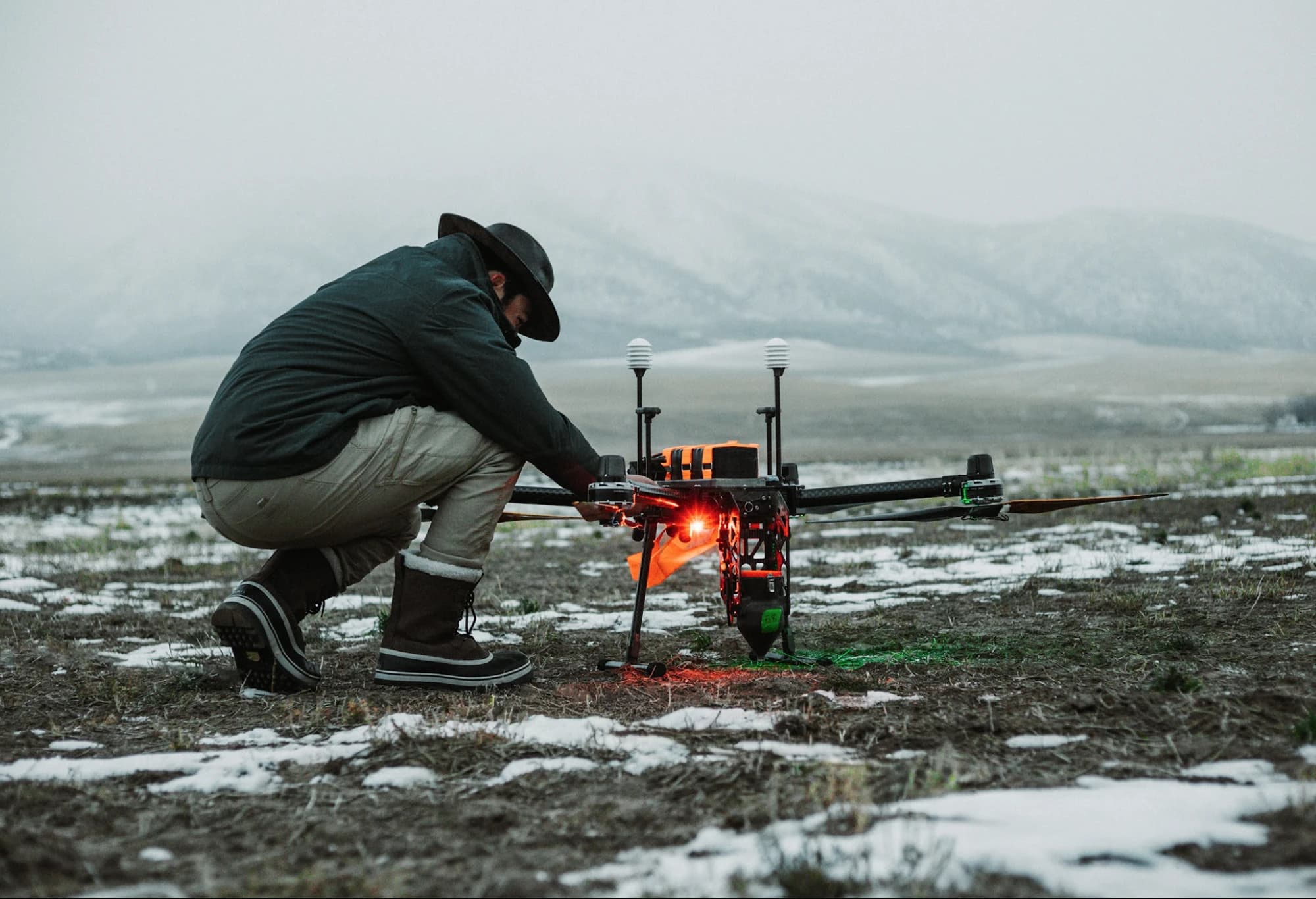
Figure 2: A Rainmaker technician prepares a cloud-seeding drone.
How Does Cloud Seeding Work?
Cloud seeding involves dispersing particles into suitable clouds to encourage precipitation. However, it cannot produce rain from nothing, and its success depends on favourable weather conditions (World Meteorological Organization, 2025). Although this technology could help address Jordan’s water crisis, the benefits remain uncertain.
Water Security, Not Just Rain
Rejecting cloud seeding entirely could mean overlooking a potential solution to Jordan's severe water shortages. More rainfall could support agriculture and help secure water supplies for local communities. Yet, how can Jordan ensure that this initiative benefits its people without overlooking environmental responsibilities? Although research has not identified significant environmental harm from commonly used seeding agents at the levels studied, the materials used in Jordan's programme and their potential effects should be clearly communicated and monitored (World Meteorological Organization, 2025).
A Landscape Worth Protecting
Ultimately, Jordan needs more water, and cloud seeding may become part of the solution. However, increasing rainfall is not the same as guaranteeing water security. The programme must be evaluated based on whether it delivers meaningful results while protecting the natural landscapes and resources on which communities depend. The question is not simply whether artificial rain is beneficial or harmful, but whether its potential benefits justify the uncertainties.
Standing at the top of the dramatic mountains in Umm Qais, overlooking the plains of Palestine, I wonder whether the serene, fertile fields stretching before me will remain a testament to the region’s natural beauty or become a reminder of what we failed to preserve.
Bibliography
“Building a Water-Secure Future in the Middle East and North Africa.” World Bank, 9 Apr. 2025.
“Jordanian-American Agreement to Enhance the Rainmaking and Precipitation Project in the North – Photos.” Roya News, 8 Oct. 2026.
https://en.royanews.com/Jordanian-American-agreement-to-enhance-the-project/
“The US Ambassador Sponsors a Rain Enhancement Agreement in Jordan.” Khaberni, 8 Oct. 2026.
World Meteorological Organization. “WMO Statement on Weather Modification.” World Meteorological Organization, 14 June 2025.
About the Author

Continue Reading

Dependency or Development? The effect of allies on the Jordanian economy
An analysis of how international alliances shape Jordan’s economy through aid, trade, and investment, while exploring the balance between economic support and the risks of long-term dependence.

Jordan’s Elderly Healthcare in Global Context
Jordan’s elderly healthcare system offers affordable basic services and strong family support but faces gaps in specialized care, rural access, and long-term support. This article compares Jordan’s system…

How Does Social Media Shape Young Jordanians’ Political Opinions?
A single post can change how a conflict is understood. But who shapes the stories young Jordanians see, and which sources do they trust? This article explores how…